Your New Blog!
This is a WordPress plug-in. If you’d like to maintain a blog on your Author Website, we’ve got you covered. To get started with moderating, editing, and deleting comments, please visit the Posts option on your dashboard.
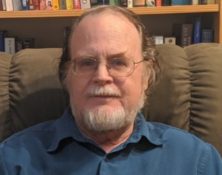
I consider myself a tourist into the past. Like a tourist I forget much of what I hear and see. However, also like a tourist I am eager to share my best experiences. For the last thirty years, along with being addicted to novels, I have never not been reading or listening to a book on history—some popular, some scholarly. The theme of my historical fiction and my website, to take a line from W.B. Yeats poem, CIRCUS ANIMALS’ DESERTION, is “Character isolated by a deed.”
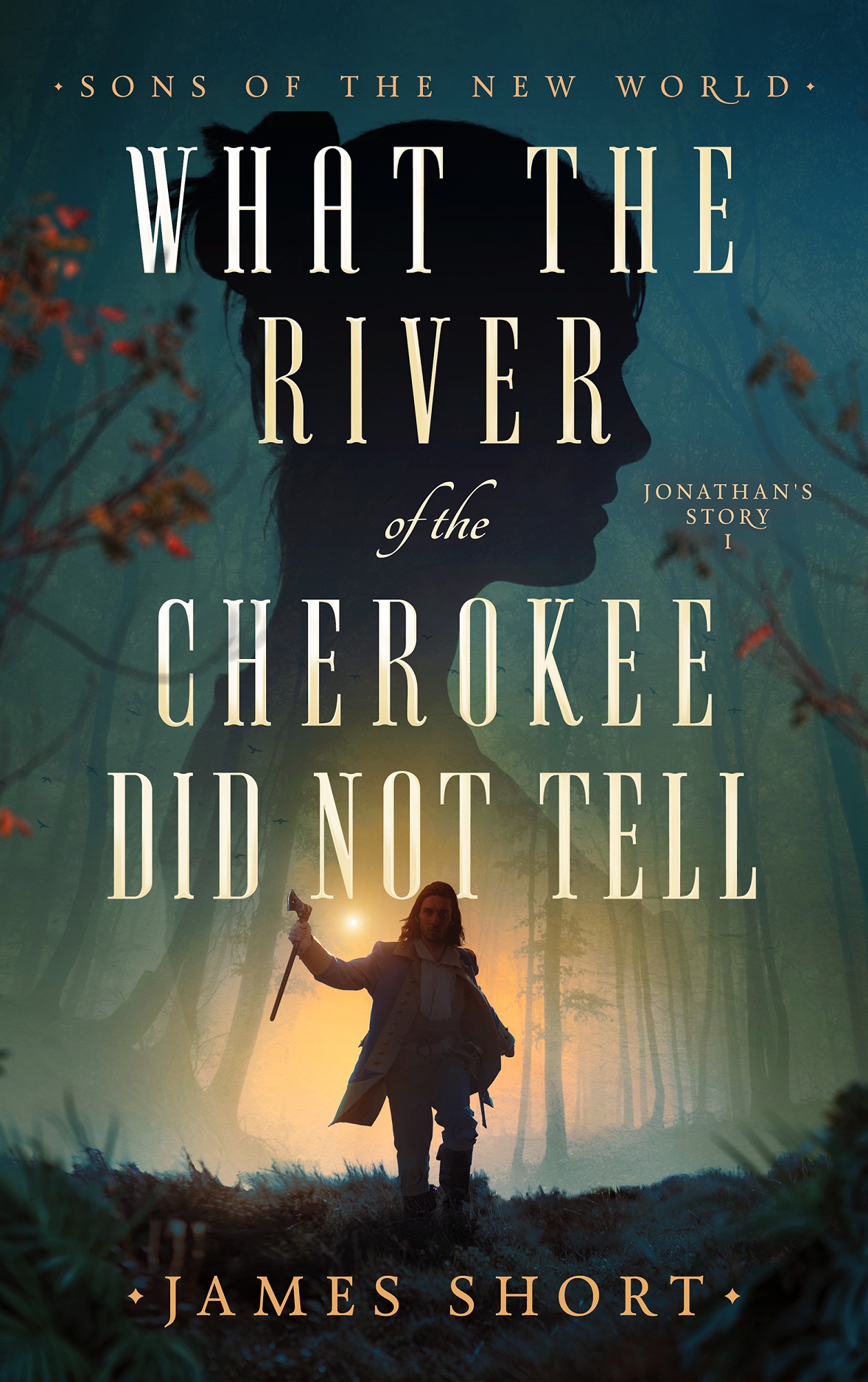
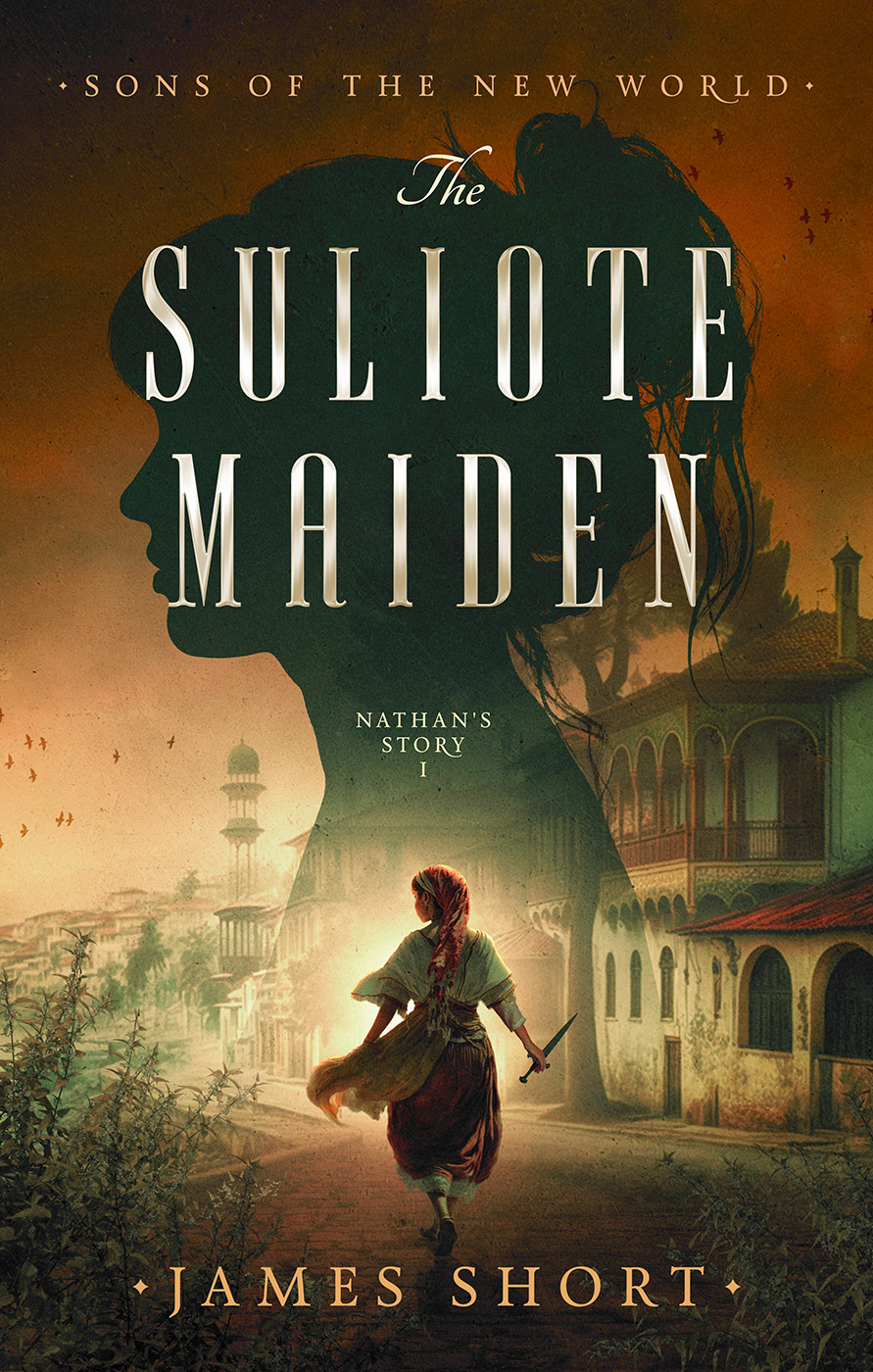
I have published three coming-of-age historical novels Brides of the Gauntlet, What the River of the Cherokee Did Not Say, and The Shadow Patriot. In March 2023 I will publish The Suliote Maiden. The series starts with a boy indentured to a fur trader in 1746 Colonial America. Thus far, the third protagonist in this series, finds himself in the Ottoman Empire just before the Greek Revolution. The series will end when I run out of imagination. I am grateful to my readers who have contributed to the success of these works. I am keenly appreciative that by giving their time, the readers give an author the most precious thing they possess.
These are the bare bones of my curricula vitae. I graduated from UCLA with a bachelors in Spanish taking a circuitous route through the University of Santa Cruz and the University of Barcelona. In an alternate universe where my life has gone wrong, I would devote the time of my long prison sentence to translating Don Quixote into English.
After falling in love at first sight with a young woman who inexplicably felt the same way, we married and have remained so near three decades. I have two daughters who prove the ugly rumors about millennials wrong. I’ve run my own business wholesaling Spanish-language gift items. About five years into my business, I made the decision to structure my days in such a way that I would maximize the time I spent in my car—an easy thing to do in Los Angeles—and listen to books. That is probably why I’ve avoided insolvency, but I never achieved outstanding success in the business world.
While I can\'t claim I live to write, for me writing is part of living.I hope I’m not abusing Latin too much when I call our species homo fabulis—the storytelling hominid—although it is likely unfair to exclude earlier members of the hominid family from this activity. Telling a tale, our most defining characteristic, might have begun with a mother comforting a child saying that father would be home soon with meat, or a hunter trying to impress the girls or the band with his exploits. I tend to believe it started while we were sitting around a fire in a cave or on the savannah and one of us asked perhaps the most important question ever asked after, “Where do we come from?” Which was, “And then what happened?”
There was once a TV reality show, Junkyard Wars, where two teams of contestants were placed in a junkyard and then challenged to build a machine that would perform a certain task. That pretty much describes my creative process. My task as a historical novelist is to take the odd bits and pieces from my life—experiences that sometimes I’d rather forget, facts that did not slip through my mental sieve, and the backlog of tears and laughter—and put it together into an entertaining story that takes the reader into another place and time.
What follows in the first draft is a rapid and wild process. I’m always reading history and have a good idea of the great expanse of my ignorance, so I usually don’t commit unforced historical errors. Otherwise, everything is up for grabs. I may change the names of the main characters halfway through, the plot veers this way and that with no regard for continuity. Punctuation is spotty. I ignore spelling corrections because I don’t want to stop the momentum. The result is a mess that I hope no one ever sees. However, a few of the characters have begun to talk back to me, complaining about the plot, making suggestions about what they actually should be doing and saying, demanding to fall in love with that character, not the one I had chosen for them.
In other words, if I didn’t love to edit, I wouldn’t write. Part of the editing process for me is vetting every scene to fit into its time and place. The research takes at least a year, thousands of google searches, and skimming hundreds of books to find out the information I need. What they wore, what were the catchphrases of the day, the smells in the air, how the ground felt underneath their feet, how they articulated their feelings? I look for details of their everyday life that are unusual to the modern reader. I am often surprised. They said “I ain’t” but not “he, she, they, et cetera ain’t” in the eighteenth century. The way to pluck a goose was to put a bag over its head. Sir William Johnson, known as the Mohawk Baronet, had a household that resembled the cast of The Lord of the Rings with dwarves, a giant, and a blind woman who played the Celtic harp at dinner. I am never satisfied because I only succeed in part. Others do better. However, I am not so humble as to not feel smug when I spot an error in another historical author’s work.
I have a few self-imposed guidelines. In my dialog, I can push back any word or phrase first appearing in the written sources a couple of decades, assuming that the spoken language precedes the written. I will also bend time just a little bit for the sake of the story. If a historical character appears at a battle on this date, I may have him arrive some days earlier. I’m a great fan of “What might have been so” as long as it doesn’t conflict too much with “What was so.”
By the time I finish my novel, I have developed a rapport with the characters as one does with friends. As I edit and refine, different aspects of them, good and bad, surprising, and disappointing, come to light. As for my grasp of their times, I flatter myself that at the end of the creative process, I could sit down at a meal with smugglers at a tavern in Southern New Jersey or with a family of squatters in their cabin beyond the Proclamation Line and fool them for almost an hour that I am not a very strange person, which we historical authors maybe truly are.
THE SULIOTE MAIDEN
When Nathan first met the Suliote maiden, Malina, he wasn’t certain she wouldn’t kill him. Neither was she.
His odyssey begins five years before when the British invade the Chesapeake in the War of 1812. Dreaming heroic dreams, thirteen-year-old Nathan runs away to join the American forces. He did not imagine that in the confusion of the shameful American defeat in the Battle of Bladensburg, he would make a mistake he could not live down.
An object of scorn by his neighbors, Nathan leaves home in the company of a British colonel. His ultimate destination is the Greek-Ottoman city of Salonika.
There, Nathan earns the friendship of Ahmet, the son of a powerful janissary. Known as the young stallions, they hunt and hawk in the wilds of Greece and feast into the long evenings. It is a life beyond anything Nathan ever dreamed of. Malina, who knows not the meaning of moderation in love or hate, completes his happiness.
Yet discord simmers just underneath the surface. Brigands infest the roads. Greeks mill gunpowder for revolution. Muslims and Christians damn each other to their respective hells. All detest the arrogant janissaries. With a Greek mother and a powerful janissary father, Ahmet is torn by these controversies.
As the Greek Ottoman world splinters into warring factions, Nathan, Malina, and Ahmet must decide whether love, devotion, and friendship are a means to survival or a barrier to survival.
Therein hangs this tale.
This is a WordPress plug-in. If you’d like to maintain a blog on your Author Website, we’ve got you covered. To get started with moderating, editing, and deleting comments, please visit the Posts option on your dashboard.
My next book signing event will be on Tuesday August 23, 2025 at:
You & Me Books
1234 Main Street
New York, NY 10005
See you there!